Player Safety or Profit? The Debate Over World Cup Hydration Breaks

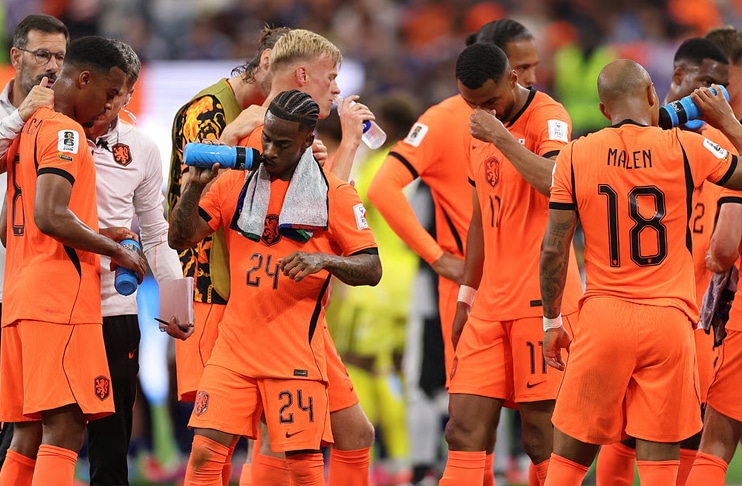
Netherlands captain Virgil van Dijk has added to the growing voices against the mandatory hydration breaks that pause every FIFA World Cup match twice.

The ongoing tournament has just begun and has already delivered dramatic goals, surprise results and unforgettable moments. However, the mandatory hydration breaks have sparked debate among fans as well as current and former players.

FIFA insists the breaks are essential for player welfare. Critics, however, are asking a different question: are these stoppages really about protecting players, or are they creating new opportunities to generate revenue?

Hydration breaks last just a total of six minutes during a match, but they stand accused of fundamentally changing the nature of football at the sport’s ultimate showpiece.

“Hydration breaks are a bit interesting,” said Netherlands captain Van Dijk, whose side drew 2-2 with Japan in Texas on Sunday in an air-conditioned arena.

“I was watching almost all of the games up until today, and every time going into a commercial is a bit… not really that I like it.

“I think for the neutral watchers on TV it’s also not great.”

Catch all FIFA World Cup 2026 live updates here!

Van Dijk was particularly puzzled by the fact that the breaks were enforced even in comfortable indoor conditions where extreme heat was not a factor.

“If it’s really hot, obviously it would be good to put them in,” he said. “But I think you have to look at it in every game separately, in my opinion.”

For many traditional football supporters, the issue is not the six minutes lost during a match. Instead, it is what those interruptions represent.

Football has always been built around two uninterrupted halves, creating momentum, pressure and rhythm that can change within seconds.

Critics argue that mandatory breaks risk turning football into a stop-start spectacle more commonly associated with American sports.

That concern intensified when FIFA later confirmed that broadcasters would be permitted to show advertisements during the hydration breaks.

Suddenly, what had been presented purely as a welfare measure started looking far more commercial to some observers.

British football writer Henry Winter was among those who voiced concerns.

Follow us on our Official WhatsApp channel

“This is the year when the game of two halves became the game of four quarters,” he said. “And the greatest sport and event was damaged for fistfuls of dollars.”

Notably, spectators during Sweden’s 5-1 thrashing of Tunisia in Monterrey on Sunday made their disdain plain by booing loudly when the pause came in the first half.

Fans similarly jeered the break in Monday’s game between Spain and Cape Verde in the air-conditioned arena in Atlanta.

The scheduled drinks breaks, not normally part of football, last three minutes each, about midway through both halves of a game at the tournament in North America.

Moreover, there is a concern that these breaks might affect the natural flow of matches.

While there is no hard evidence yet, several matches have featured noticeable momentum shifts immediately after the stoppages. That should not be surprising.

Hydration breaks effectively give coaches two extra opportunities each half to speak directly with players, adjust tactics and address problems.

In some cases, they can feel like unofficial time-outs. A team struggling to cope with pressure suddenly receives a chance to regroup. Conversely, a side dominating possession can lose rhythm and intensity.
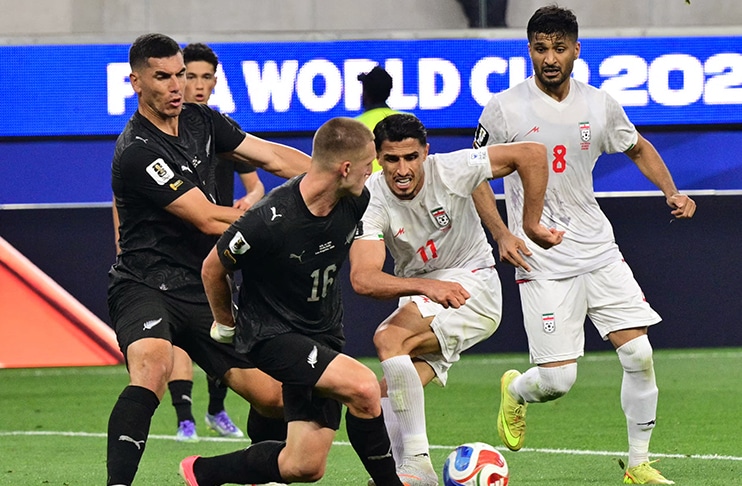
READ: Iran begin FIFA World Cup with 2-2 New Zealand draw

Iran begin FIFA World Cup with 2-2 New Zealand draw

Iran twice battled back for a 2-2 draw with New Zealand on Monday in their frenetic opening match of the FIFA World Cup 2026 campaign that has been utterly overshadowed by war, politics and protests.

The Iranian team’s very presence at the Los Angeles Stadium had long felt uncertain, after months of military conflict between their nation and the United States.

At last able to focus on the football, the Iranian players twice found themselves trailing to the tournament’s lowest-ranked team, thanks to goals from New Zealand striker Elijah Just.

However, with a vocally pro-Iran crowd drowning out planned protests by anti-government demonstrators, equalisers from Ramin Rezaeian and Mohammad Mohebi spared Team Melli any further embarrassment.

The Iran team have dealt with a gamut of obstacles before even arriving at this World Cup, from delayed and refused US visas, to moving their training camp to Mexico at the last minute.

Hundreds of protesters against Iran’s ruling regime demonstrated outside the venue on Monday, saying the team does not represent their people.

Catch all FIFA World Cup 2026 live updates here!

Many inside the stadium sported anti-government emblems, nonchalantly flouting FIFA rules against political messaging, and the Iranian anthem received boos and cheers.

Iran coach Amir Ghalenoei had insisted on the eve of the game that his players would not “pay attention to any of the hype.”

But his side was stunned by an early New Zealand goal on the counter created by veteran striker Chris Wood. Collecting a long pass in the seventh minute, the Nottingham Forest target man expertly held up the ball, turned and played in the onrushing Elijah Just.

After a sharp exchange of passes with Sarpreet Singh and Wood, Just leapt and smashed a volley into the net.

Iran’s star forward Mehdi Taremi nearly levelled in the 23rd minute, the former Inter Milan man’s long-range effort ricocheting off the right post.

They came close again as Kiwi keeper Max Crocombe was tackled outside his box, only able to watch as a lobbed effort at his open goal faded wide.

Follow us on our Official WhatsApp channel

Iran’s equaliser did come in the 32nd minute with a poacher’s finish from wingback Rezaeian. Rezaeian latched onto a rebound following Saman Ghoddos’ smart pass into Shahriyar Moghanlou, whose shot on the turn was blocked by the outstretched leg of Finn Surman.

Iran defender Ali Nemati thought he had scored in first-half stoppage time, but his header from a free kick was comfortably offside.

New Zealand retook the lead in the 55th minute. Motherwell striker Just bagged a brace via a crisp one-two with Wood, after Liberato Cacace had stolen the ball on the halfway line.

But they were again pegged back nine minutes later, as Mohebi’s leaping header from Rezaeian’s superb cross glanced off the inside post.

The game’s final half hour saw Iran on the front foot, but unable to grab a winner due to a combination of sloppy finishing and dogged New Zealand defending.

The draw dents Iran’s hopes of progressing to the knockouts for the first time, though fellow Group G contenders Egypt and Belgium also drew on Monday. Meanwhile, New Zealand’s wait for a first World Cup win goes on.

READ: World Cup referee Shaun Evans cleared over ‘white supremacist’ gesture: FIFA

World Cup referee Shaun Evans cleared over ‘white supremacist’ gesture: FIFA

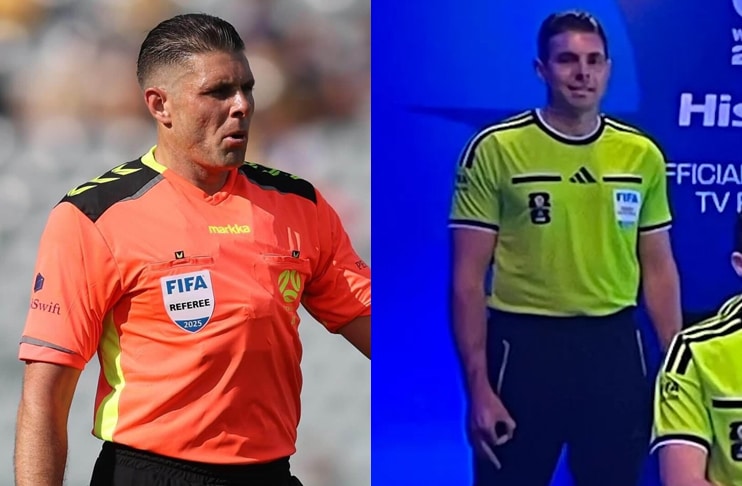
FIFA on Monday cleared World Cup 2026 referee Shaun Evans of wrongdoing after the Australian official was accused of making a white supremacist hand gesture during a television broadcast.

Evans, who was working as a support video assistant referee during Germany’s game with Curacao on Sunday, was captured placing his index finger and thumb together with his right hand to form a circle.

The gesture, which has been linked to far-right extremist groups, was spotted by users on social media, prompting a FIFA investigation.

Catch all FIFA World Cup 2026 live updates here!

Evans said the gesture had been entirely unintentional in a statement on Monday.

“FIFA’s independent Disciplinary Committee can confirm that, after looking into the matter involving support video assistant referee Shaun Evans, it has found no evidence of breaches of the FIFA Disciplinary Code,” the governing body said in a statement.

Evans said the gesture had arisen from an “involuntary, subconscious twitch.”

Follow us on our Official WhatsApp channel

“I would like to clarify that I did not intentionally make a hand gesture or symbol to communicate a message, affiliation, game or belief of any kind,” Evans said.

“The only explanation I can offer is that the movement was an involuntary, subconscious twitch, and I was unaware I had done it at the time.

“I understand how the gesture has been interpreted, and I regret this, however, I want to be very clear and categorically say that I did not knowingly or deliberately make the hand symbol suggested.”

READ: Cape Verde hero Vozinha sheds ‘tears of resilience’ after stopping Spain

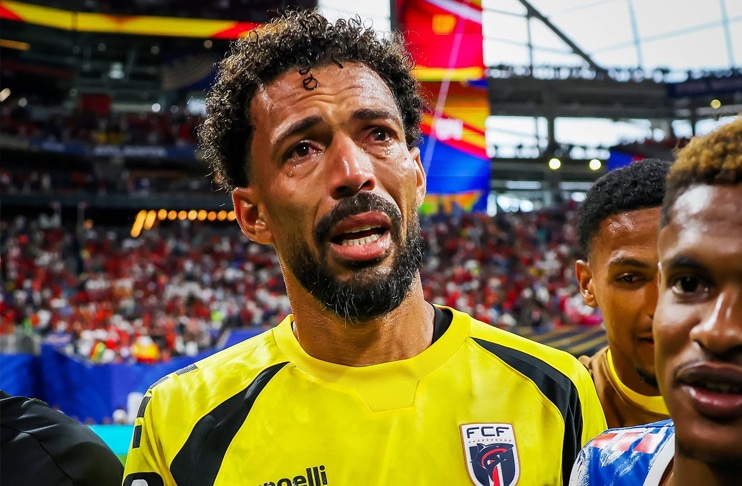
Cape Verde hero Vozinha sheds ‘tears of resilience’ after stopping Spain

Spain failed to find a way past inspired Cape Verde goalkeeper Vozinha as the 40-year-old secured a stunning 0-0 draw for the FIFA World Cup debutants and was reduced to tears at his heroics.

La Roja rolled into Atlanta as one of the pre-tournament favourites, with coach Luis de la Fuente boasting that he has the best squad in the competition.

Yet a Spain side featuring a Ballon d’Or winner in Rodri, Fabian Ruiz, fresh from a second consecutive Champions League victory with Paris Saint-Germain (PSG), and packed with many of the squad that won Euro 2024, could not breach Cape Verde’s dogged defence.

Even the introduction of Barcelona superstar Lamine Yamal on his return from injury in the second half did not break the deadlock as Vozinha marshalled his backline to a clean sheet they will never forget.

“Very proud. For me, it is an honour for me to represent my country,” Vozinha told reporters. “We are from a small country. Our qualification was very difficult in a group with Cameroon and Libya, but we knew if we followed the plan of the coach, we had a great chance to qualify.

“The dream came true. We competed against Spain, one of the best teams in the world. We are very happy and proud of all the players and people of Cape Verde.”

Follow us on our Official WhatsApp channel

Vozinha was only really tested in a short spell of Spanish pressure just before half-time.

He turned over Mikel Oyarzabal’s looping header and got down well to Ferran Torres’ low shot before producing his best stop at full stretch from an Aymeric Laporte header.

His tears at full-time were provoked not only by the size of Cape Verde’s achievement, but also by the fact that he was not able to share the moment with his mother and grandparents.

“I cried because I grew up with my grandparents and unfortunately they were not here, they died a few years before, and they did everything for me and my life,” he added.

“Also my mum she didn’t manage to be here because of the visa. The money for the visa, we didn’t manage (to do) on time and I would like her to be here.

“But I am very happy and also happy for all the Cape Verdean people.”

Catch all FIFA World Cup 2026 live updates here!

Vozinha’s nomadic career has taken him from his homeland to Angola, Moldova, Cyprus and Slovakia before his latest move to Portugal.

And he now has a legion of new fans. In just a few hours, his Instagram account ballooned from a mere 50,000 followers to two million.

Cape Verde coach Bubista paid tribute to one of his most experienced players, who, on his 89th cap, finally reached the biggest stage in world football.

“He was overcome with emotion. He has a lot of experience and has given so much to get to this stage. They were tears of resilience,” said Bubista.

“He has spent many years with us. I normally do not like to comment on individuals, but he had a great performance. He was the best player on the pitch but I think we were defensively very strong and he is there to help the team.”

READ: Uruguay frustrated by Saudi Arabia in World Cup draw

Uruguay frustrated by Saudi Arabia in World Cup draw

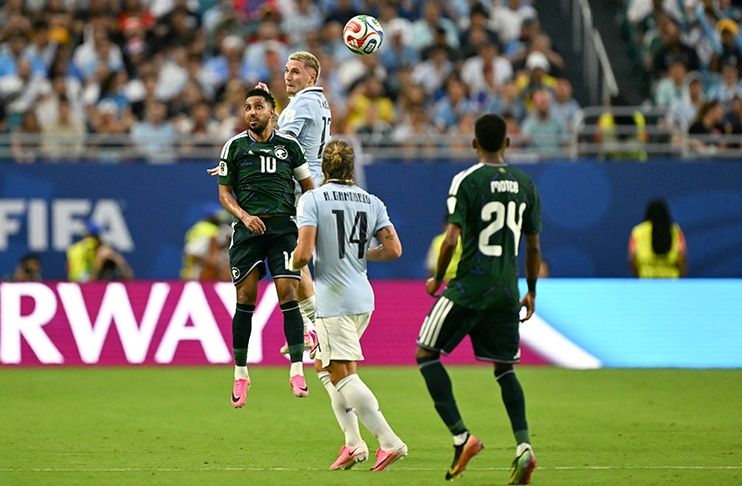
Uruguay dominated but had to settle for a 1-1 draw in their FIFA World Cup 2026 opener against Saudi Arabia in the sweltering heat of Miami on Monday to leave an intriguing Group H wide open.

The stalemate came hours after one of the biggest shocks in World Cup history when European champions Spain were held 0-0 by debutants Cape Verde in the same group.

After the first round of games in the pool, all four teams have one point.

Defender Abdulelah al-Amri gave the Saudis a surprise lead near the end of the first half, only for Uruguay’s second-half pressure to pay off with 10 minutes left through Maxi Araujo.

Marcelo Bielsa’s Uruguay racked up 22 shots in the second period, but the Saudi defence and goalkeeper Mohammed al-Owais doggedly held firm.

“We should have won this match,” said the colourful Argentine Bielsa, whose side will play Cape Verde next. “We weren’t able to show the best version of ourselves,” he added, admitting that his side only got going in the second half.

Catch all FIFA World Cup 2026 live updates here!

Uruguay, World Cup winners in 1930 and 1950, saw their arrival in the United States from Mexico delayed by a snag with the paperwork for their plane.

In evening temperatures of more than 30 °C and energy-sapping humidity, both teams struggled to create much in front of goal early on.

Just after the half-hour mark, the Saudi stopper Owais was called into action for a second time to parry a diving header from close range by Federico Vinas.

The Saudis, who stunned eventual champions Argentina 2-1 to start their campaign at the Qatar 2022 World Cup, looked to hit their opponents on the break.

They had their first real opportunity shortly before half-time when Amri forced Fernando Muslera to palm away his fizzing shot.

Four minutes before the break, the defender scored, reacting fastest to poke home from close range after Muslera spilled a header from a corner.

Follow us on our Official WhatsApp channel

After a toothless first period, Bielsa had seen enough, dragging off defender Matias Vina and anonymous former Liverpool striker Darwin Nunez.

Winger Agustin Canobbio and left-sided Juan Manuel Sanabria were introduced. The double substitution sparked Uruguay, who surprisingly did not play a single World Cup warm-up game, into life.

Saudi coach Georgios Donis, brought in just two months before the tournament, saw his team retreat farther and farther back.

On the hour, Manchester United midfielder Manuel Ugarte pinged the ball against the foot of the Saudi post from well outside the box.

The pressure finally told late on when Owais made a mess of a routine stop, and Araujo gobbled up the rebound.

There looked to be only one winner after that, but Saudi Arabia just about held on for a vital point.

READ: Egypt denied first World Cup win as Belgium salvage draw

Egypt denied first World Cup win as Belgium salvage draw

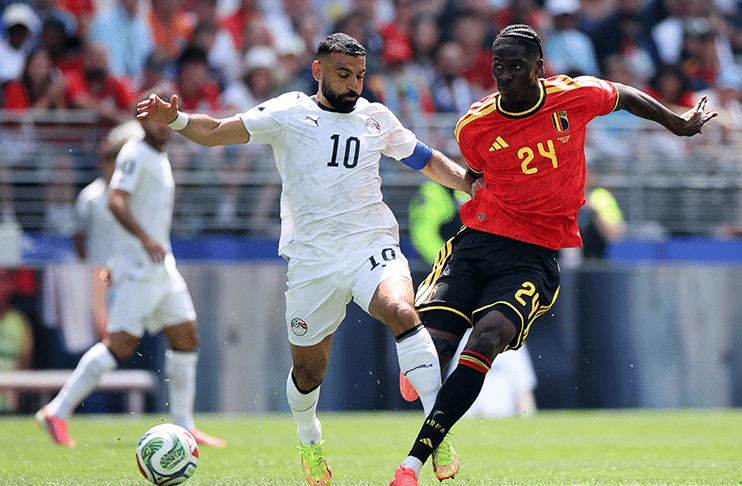
Belgium and Egypt drew 1-1 in their World Cup opener on Monday after a second-half Belgian equalizer spoiled Mohamed Salah’s 34th birthday.

Emam Ashour opened the scoring early in the first half in Seattle, before Romelu Lukaku came off the bench after the hour to force Egypt’s Mohamed Hany into an own goal.

With the draw, seven-time Africa Cup of Nations champions Egypt’s wait for a first victory at a World Cup goes on.

This is their fourth participation in the global showpiece, and with Group G fixtures to come against Iran and New Zealand, they will hope to break that hoodoo in North America.

“We know Belgium are a good team, (they have) good quality players but we can’t say it was the hardest game or easiest game. Every game for us has got to be three points,” Egypt’s 18-year-old Barcelona forward Hamza Abdelkarim said.

For Belgium, who are now without a win in their last three World Cup matches, going back to their group-stage exit in 2022, this tournament is likely the last chance for the remnants of their golden generation to better their third-placed finish in Russia eight years ago and finally win silverware.

Veterans Kevin De Bruyne, Thibaut Courtois, and Lukaku are the main protagonists of that group still involved in Rudi Garcia’s squad.

“The opening match of a competition like the World Cup is always a tough one, especially against one of Africa’s top teams,” Garcia said.

Catch all FIFA World Cup 2026 live updates here!

“We managed to equalize thanks to a player who came off the bench, which shows just how important the whole squad is.”

With all eyes in the Pacific Northwest on Salah and De Bruyne, it was the ex-Manchester City playmaker that created the first moment of note in the match when he dragged a sharp effort narrowly wide in the seventh minute.

However, it was Ashour who upstaged the pair just before the hydration break when he received the ball in a similar position to De Bruyne but his sweetly-struck effort left Courtois no chance as it whistled into the bottom-right corner.

It was just the second time in their history that Egypt had taken the lead in a World Cup match — after Salah opened the scoring in a 2-1 defeat to Saudi Arabia in 2018.

De Bruyne came within inches of levelling early in the second period when he whipped a close-range free-kick over the Egyptian wall, only to see it rocket off the outside of the post.

Salah responded at the other end as he ghosted into the box but had his downward header punched away by Courtois with Ashour getting his follow-up effort all wrong.

Follow us on our Official WhatsApp channel

The match became stretched as both sides came close on a couple of occasions, including a screaming left-footed volley by Belgian captain Youri Tielemans.

With 65 minutes gone, Garcia decided to send on Lukaku.

The change immediately paid dividends as Belgium’s all-time top goalscorer showed his predatory instincts to dash in on a Thomas Meunier cross, with his presence enough to destabilize Hany who put through his own net.

Salah departed the field with 15 minutes remaining as Egypt sought to shut up shop and ultimately held out for a point.

READ: Cape Verde hold Spain to epic draw on FIFA World Cup 2026 debut

Cape Verde hold Spain to epic draw on FIFA World Cup 2026 debut

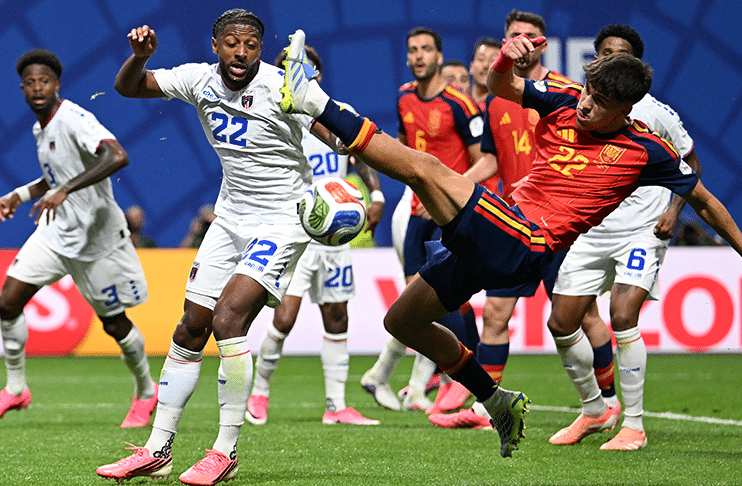
Spain’s ghosts of recent World Cup horror shows reappeared in Atlanta as the European champions were held 0-0 by debutants Cape Verde in their opening game on Monday.

Lamine Yamal was left on the bench as the Barcelona superstar is eased back to fitness after nearly two months out with a hamstring injury and even his appearance as a second-half substitute failed to break down Cape Verde’s dogged defence.

Since winning the World Cup for the first time in 2010, Spain have not won a knockout game and their inability to make dominance of possession count was reminiscent of their meek exits in 2018 and 2022.

“Reality has to sink in,” said Spain boss Luis de la Fuente. “This is a World Cup. We know that some teams, on paper, they are not better than us and we thought that we were far better than them. But then it’s a struggle to win.”

Blessed with what coach De la Fuente claimed is the best squad in the competition, Spain were considered among the pre-tournament favourites to go all the way and lift the World Cup on July 19.

But the importance of Yamal and Nico Williams to their chances of success was underlined by a flat performance.

Williams also had an injury-disrupted season at Athletic Bilbao and was not introduced until the 87th minute.

Ranked 67 in the world, Cape Verde were making their debut on the global stage and did a nation of just over 500,000 people proud.

In stark contrast to the searing temperatures faced by some other sides, Atlanta’s state-of-the-art air conditioned stadium meant there was no excuses for the slow tempo of Spain’s build-up.

Catch all FIFA World Cup 2026 live updates here!

Indeed the mid-half hydration break was met by boos with fans frustrated at the break in play despite the cool conditions.

It took until six minutes before half-time for Spain to seriously threaten.

Marc Cucurella, fresh for sealing his move from Chelsea to Real Madrid, sent over a teasing cross that Ferran Torres turned onto the crossbar and Cape Verde goalkeeper Vozinha got back on his feet to turn Mikel Oyarzabal’s looping header over the bar.

Torres tested Vozinha again moments later before Aymeric Laporte’s header from a corner was also clawed away by the Cape Verde number one just before half-time.

The break came at a good time for the Blue Sharks and they comfortably held out in the second period until Yamal’s entrance after the second hydration break.

Billed as one of the stars of the tournament, the 18-year-old’s appearance instantly lifted the crowd and injected life into the pedestrian Spanish attack.

His first involvement set up a decent opening for fellow substitute Mikel Merino which was too close to Vozinha.

Yamal also began the move that saw Oyarzabal’s effort deflected over with Spain’s best chance of the second half.

Follow us on our Official WhatsApp channel

Cape Verde nearly snatched a famous victory in the final minute of the 90 when Dani Borges planted a header too close to Unai Simon.

But even without a winner, 40-year-old Vozinha was reduced to tears at full-time as Cape Verde produced the biggest shock of the tournament so far.

“I’ve worked all my life for this, for this moment, for this dream,” said Vozinha, who plays for Chaves in the Portuguese second division.

“A lot of generations in the past dreamed of this, they didn’t achieve it,” he added. “The dream came true, for all of us.”

Spain’s road to victory in 2010 also began disappointingly with defeat to Switzerland, but they have much to work on ahead of facing Saudi Arabia in Atlanta once more on Sunday.

Cape Verde next take on Uruguay in Miami.

READ: Rutherford, Holder star as West Indies seal T20I series win over Sri Lanka

PCB unveils new central contracts system for Pakistan cricketers

LAHORE: The Pakistan Cricket Board (PCB), on Monday, introduced a significant overhaul of its central contracts system, unveiling a new format-based structure designed to reward performance, strengthen player development and provide clearer pathways across all levels.

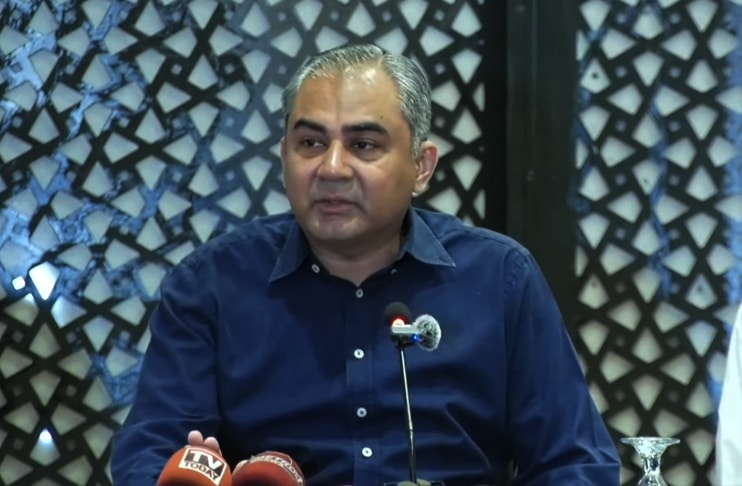
PCB Chairman Mohsin Naqvi revealed the new framework during a press conference, alongside white-ball head coach Mike Hesson, national selector and Director of High Performance Aqib Javed, and other senior board officials.

The revamped model replaces the traditional A, B, C and D categories with a five-track system that classifies players according to their role, format specialisation and stage of development.

Under the new framework, Track AB will consist of Pakistan’s premier multi-format cricketers who feature in both Test and One-Day International cricket. These players may also be selected for T20Is but will primarily be recognised for their contributions in the longer formats.

Track A has been created specifically for red-ball specialists, with the PCB aiming to strengthen Test cricket by providing additional incentives and allowing players greater opportunities to participate in overseas first-class competitions.

Track BC will include core white-ball cricketers who form part of Pakistan’s ODI and T20I setup, while Track C is reserved for T20 specialists and franchise players, offering them increased flexibility to compete in domestic and international leagues around national commitments.

Follow us on our Official WhatsApp channel

Meanwhile, Track D will serve as a development category featuring emerging cricketers identified through the National Cricket Academy (NCA) and Pakistan’s domestic pathway system.

The PCB described the model as a first-of-its-kind structure in international cricket, with players to be assessed primarily against others operating within the same format pathway rather than across all formats collectively.

Speaking about the new framework, Naqvi said the board had developed a detailed assessment mechanism to ensure greater transparency in the awarding of central contracts.

“We have prepared a system where 85 per cent of the contract criteria will be data-driven, while the remaining 15 per cent will be at the discretion of the selection committee,” he said.

The PCB chairman added that the new approach was designed to address concerns surrounding player evaluation at the domestic level and create a more transparent process.

“There were cases where players at the domestic level were not receiving fair recognition. We hope this entire process will now be transparent, and there should be little room for objections regarding how contracts are awarded,” he stated.

Naqvi also confirmed that medical fitness would remain a mandatory requirement for players seeking central contracts.

READ: Rutherford, Holder star as West Indies seal T20I series win over Sri Lanka

Rutherford, Holder star as West Indies seal T20I series win over Sri Lanka

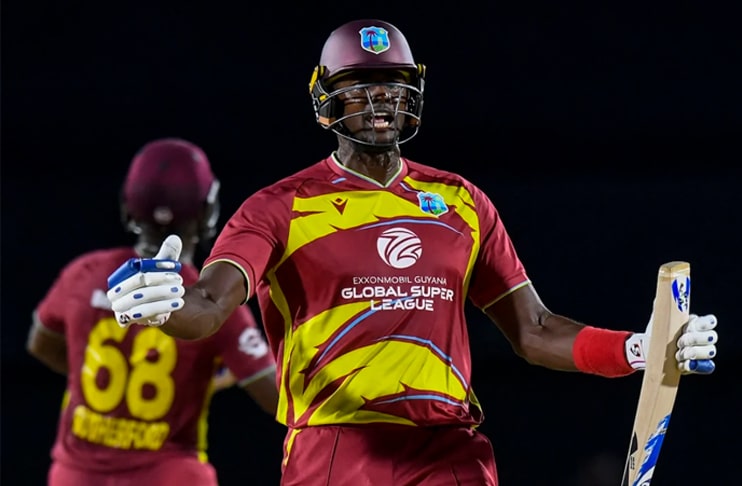
KINGSTON: Sherfane Rutherford produced a composed unbeaten half-century while Shamar Joseph’s five-wicket haul set up a dramatic West Indies victory over Sri Lanka in the third T20I at Sabina Park on Sunday, as the hosts clinched the three-match series 2-1.

Chasing a target of 170, the West Indies completed the job in 19.4 overs after a tense finish that swung repeatedly before the Caribbean side eventually held their nerve to seal a thrilling win.

The chase, however, began on the worst possible note as the West Indies lost their captain early in the innings, putting immediate pressure on the top order.

Shimron Hetmyer provided brief resistance with a brisk 32 off 19 balls, but Sri Lanka’s spinners quickly tightened their grip, reducing the hosts to 53-4 inside 8.2 overs.

At that stage, Sri Lanka appeared firmly in control of the contest.

The momentum shifted through a crucial 81-run partnership between Rovman Powell and Sherfane Rutherford, who rebuilt the innings with calculated aggression.

Follow us on our Official WhatsApp channel

Powell, who contributed a vital 33, accelerated the scoring in the death overs, striking three sixes in a single over off Dushmantha Chameera in the 17th over before falling on the final delivery of the same over.

With the match finely poised, Rutherford found support from Jason Holder, who delivered a stunning late cameo. Holder smashed three sixes in the 19th over to completely swing the match in West Indies’ favour, reducing the equation to just six runs needed from the final over.

The hosts completed the chase on the fourth ball of the last over, sealing a memorable series victory in front of a jubilant home crowd.

Rutherford remained unbeaten on 54 off 40 deliveries, striking three fours and four sixes, while Holder finished with a blistering 21 not out from just five balls, including three towering sixes.

Earlier, Sri Lanka posted 169 all out in their 20 overs, with Dunith Wellalage top-scoring with 43 off 28 balls. Kamil Mishara added 28, while Pathum Nissanka contributed 26 in a steady but ultimately insufficient batting effort.

Shamar Joseph led the bowling attack for West Indies, taking five wickets for 33 runs, while Akeal Hosein, Matthew Forde, Jason Holder and Roston Chase chipped in with one wicket each..

READ: Reason behind Lamine Yamal not wearing Spain’s No. 10 jersey revealed

Reason behind Lamine Yamal not wearing Spain’s No. 10 jersey revealed

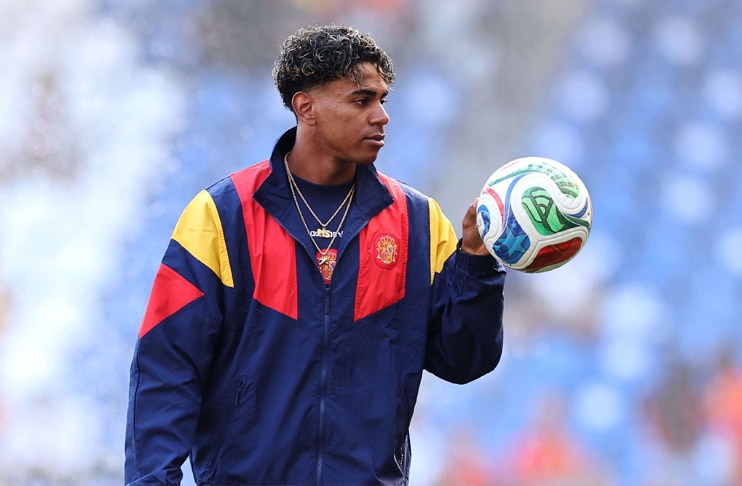
Spain’s rising superstar Lamine Yamal may be the headline name in their FIFA World Cup 2026 squad, but the Barcelona winger will not be wearing the iconic No. 10 jersey during the tournament, sparking curiosity among fans.

Instead, the 18-year-old will continue with the No. 19 jersey, the same number he wore during Spain’s successful Euro 2024 campaign in Germany, despite his growing status as one of the team’s most influential attacking players.

The No. 10 shirt, traditionally reserved for a side’s most creative force, has long carried special significance in world football, often worn by playmakers or leading attackers.

Catch all FIFA World Cup 2026 live updates here!

For Spain in this tournament, however, Dani Olmo, Yamal’s Barcelona teammate, will wear No. 10 for La Roja in North America.

He usually wears No. 20 at Barcelona, and Yamal wears No. 10; however, Olmo’s higher seniority in the national setup gives him priority in Spain’s internal shirt-number selection system.

Spain allocate squad numbers based on seniority, meaning players with more international caps are given preference when choosing available numbers.

Follow us on our Official WhatsApp channel

Despite Yamal’s rapid rise since his debut in 2023, Olmo’s 50 appearances for Spain place him ahead in the hierarchy compared to Yamal’s 25 caps. That system explains why Olmo will be wearing No. 10 while Yamal will continue with No. 19.

Yamal, who has quickly become one of Spain’s most important attacking threats, remains central to their plans for the World Cup, even without the symbolic shirt number often associated with football’s greatest playmakers.

READ: Spain’s Lamine Yamal achieves fitness ahead of Cape Verde clash