The Pakistan Cricket Board (PCB) on Saturday announced a 16-member Test squad for the upcoming two-match series against Bangladesh, with four uncapped players included as part of what appears to be a continued push towards rebuilding the red-ball setup.
But beneath that routine selection cycle lies a deeper issue that continues to define Pakistan’s red-ball structure, lack of consistency in player development and long-term planning.
The series, part of the ICC World Test Championship cycle, will be played from May 8 to 20, with the first Test scheduled at the Sher-e-Bangla National Cricket Stadium in Dhaka and the second at the Sylhet International Cricket Stadium.
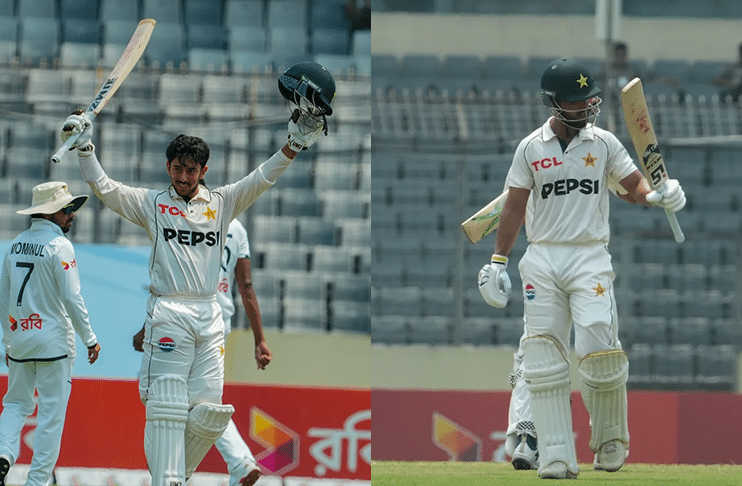
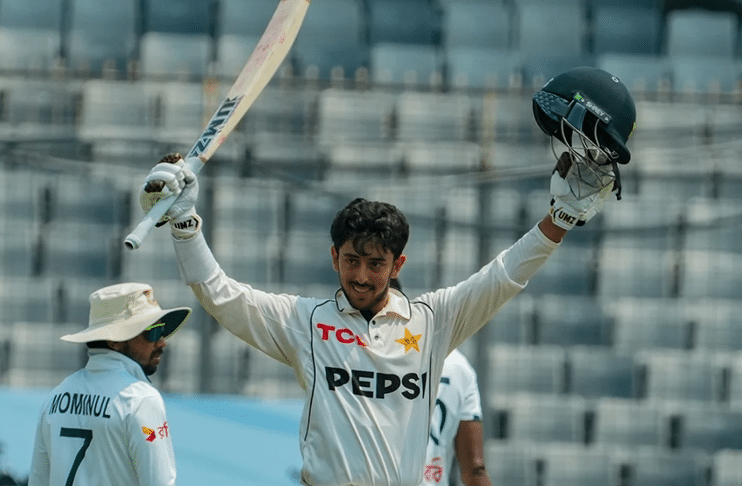
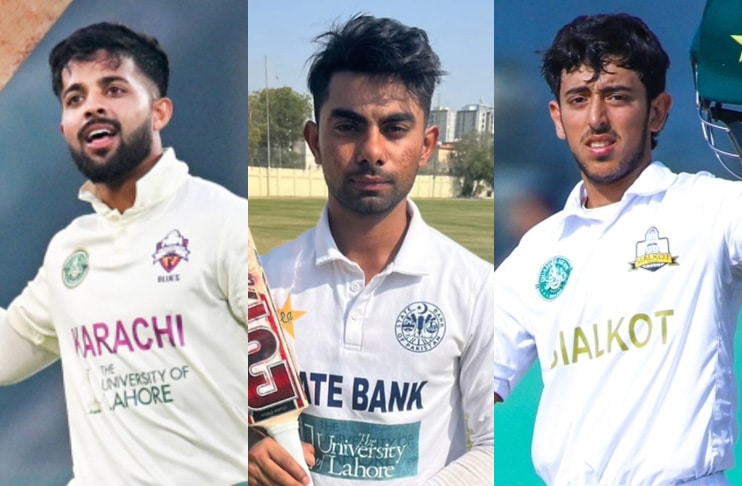
Shan Masood will continue to lead the side, while Abdullah Fazal, Amad Butt, Azan Awais and Muhammad Ghazi Ghori have earned maiden call-ups to the Test squad.
On paper, this looks like healthy regeneration. In practice, however, it adds to a growing concern: Pakistan keeps rotating through uncapped players without giving them time to settle at the highest level.
No continuity in the selection strategy
In the previous home Test series against South Africa in October 2025, Pakistan had also included three uncapped players, Asif Afridi, Rohail Nazir, and Faisal Akram, in the squad.
Out of those three, only left-arm spinner Afridi made his debut, picking up six wickets in his lone Test appearance, while the other two were never handed a cap before being dropped from the current squad.
These selections raise an important question: what was the point of their inclusion?
39-year-old Asif Afridi, with over 250 first-class wickets at an average close to 24, is a proven domestic performer, particularly in spin-friendly conditions like Bangladesh; however, he has been dropped after a solitary Test.
Similarly, left-arm wrist spinner Faisal Akram, who has 60 wickets in 15 first-class matches, is also out despite previously being part of the South Africa tour.
Interestingly, the squad features only two specialist spinners in Noman Ali and Sajid Ali.
Who is Pakistan’s reserve wicket-keeper?
Rohail Nazir, once seen as a long-term backup to Mohammad Rizwan, was also part of the South Africa squad but is now omitted despite having stronger domestic experience than the current replacement Muhammad Ghazi Ghori.
Rohail, who has 2470 first-class runs at 34.78 along with 148 catches and 23 stumpings in 52 matches, was not given a game in South Africa despite being in the squad.
Ghori, meanwhile, has 1692 runs in 26 first-class matches at an average of 41.26. He is undeniably a talented keeper-batter, but the question is not about his ability; it is about the consistency of opportunity.
If Rohail was not going to be tested at the international level, why was he selected in the first place?
Top-order batting conundrum
Top-order batter Abdullah Shafique has been dropped after a below-par showing against South Africa, where he scored 106 runs at an average of 26.50; however, his opening partner Imam-ul-Haq remains in the squad after scoring just 13 more runs in the same series.
Two left-handed openers, Abdullah Fazal, who has scored 1828 runs in 25 first-class matches at 41.54, and Azan Awais, who has 2673 runs at an average of 48.60, have been included.
Their inclusion suggests a search for new opening combinations, but the lack of clarity around roles remains a concern. Will Pakistan persist with Imam and hand the Test cap to one of these two? Or will we see a new opening pair with two new batters? There is no clarity, and that uncertainty often reflects a lack of planning.
It’s worth noting that a similar search for a reliable Test opener landed an opportunity for Mohammad Huraira, who featured in a two-match home Test series against the West Indies in early 2025.
He managed a mere 46 runs in spin-friendly conditions during the series and was subsequently dropped from the Test team without being given a long enough run to establish himself.
His first-class record, 4762 runs in 65 first-class matches at an average above 45, including a triple century, including a triple century, suggests potential that has not been fully explored at the international level.
When compared with the newly selected openers, Huraira’s exclusion becomes even harder to explain purely on performance grounds. This is where Pakistan’s selection model appears inconsistent: promising players are tried briefly, then replaced, rather than being developed through sustained exposure.
Selection direction under scrutiny
None of this is an argument against the current squad members of the Pakistan Test team. Every player selected has earned his place through domestic or international performances. The issue is structural rather than individual.
Pakistan’s Test setup seems caught in a cycle of experimentation without patience, introducing players, testing them briefly, and then moving on before they can adapt to international demands.
Test cricket, more than any other format, rewards stability and continuity. Teams that succeed in it build combinations over time, allow players to fail and learn, and invest in roles rather than constantly reshuffling them. Pakistan, at least in recent cycles, has struggled to maintain that balance.
The talent pool is not the problem. Pakistan continues to produce capable fast bowlers, spinners, and batters in domestic cricket. The real challenge lies in how that talent is managed once it reaches the international stage.
READ: Babar Azam breaks multiple records against Quetta Gladiators